
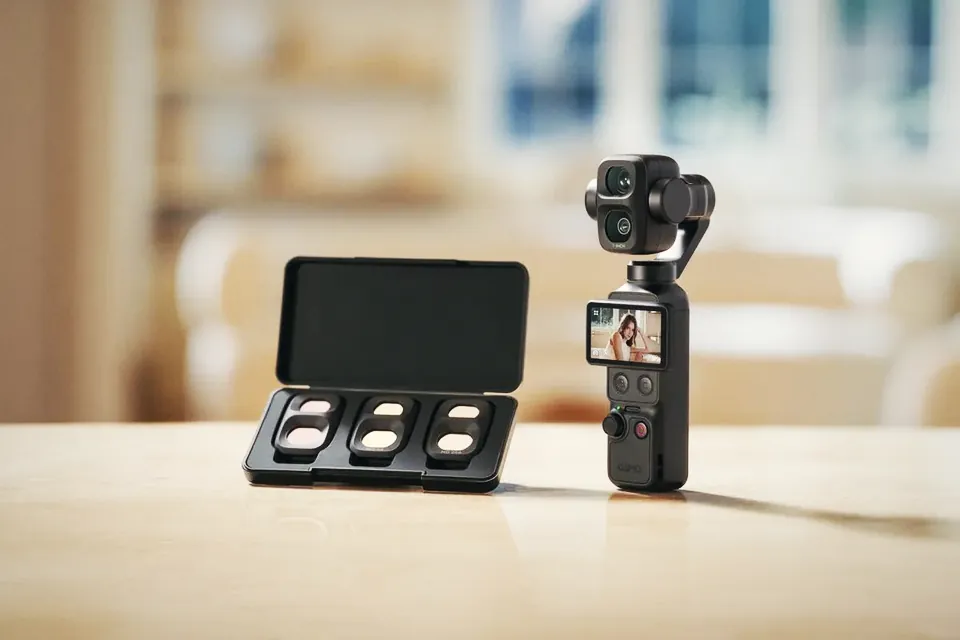
Osmo Pocket 4P ND filters: why ISO 1600 in D-Log 2 changes which ones you need
At native ISO 1600 in D-Log 2, the Osmo Pocket 4P needs about 11 stops of ND in full sun. Most Pocket ND kits stop at 6 to 8. The maths, and what to buy.
Nine variable ND filters in three price tiers, with stop ranges, hard stops and euro prices. Why one 82mm VND with step-down rings beats three smaller filters.
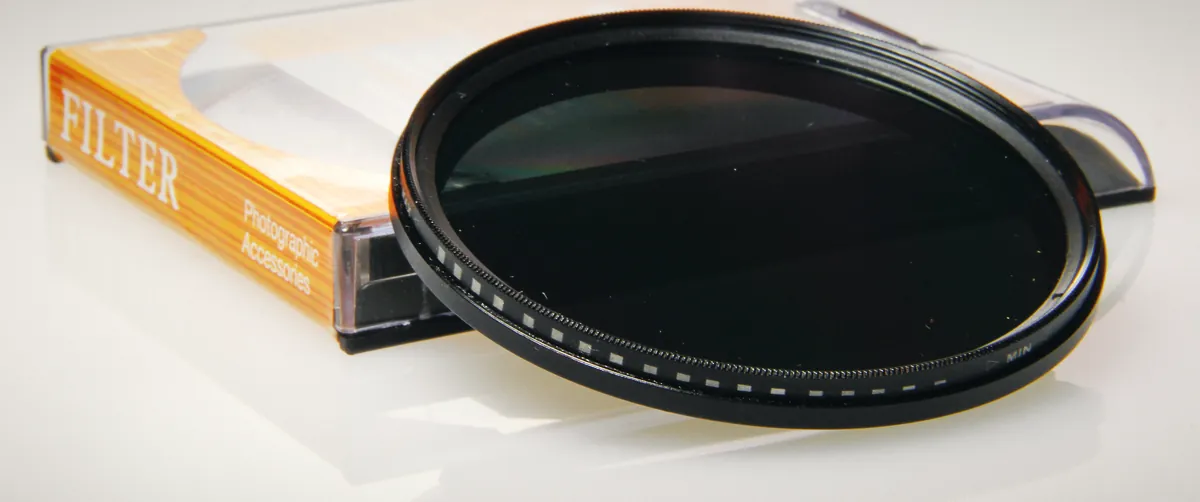
If you're buying one variable ND for video, buy it in 82mm and put a step-down ring on every smaller lens. We compared nine 82mm VNDs from B+W, NiSi, PolarPro, Tiffen, Freewell, Urth, K&F Concept, Neewer and JJC, in three price tiers from about €45 to about €250. The two specs that matter most are the stop range and whether the filter has hard stops. Brand comes after those.
Most "best VND" lists also skip the exposure maths. A 1-to-5-stop filter, the most common kind, can't hold a 180° shutter in full sun if you shoot log at ISO 800. For that you need a 6-to-9-stop filter, and only a few brands make one.
Because you buy the filter once. Sony's FE 24-70mm F2.8 GM II and Canon's RF 24-70mm F2.8L both take 82mm, and a 67mm or 77mm prime takes the same filter with a step-down ring. Buy three VNDs in three sizes and you pay three times for the expensive part, the glass.
The price gap between sizes is smaller than you'd guess. Neewer sells the same VND in every size on its own stores, so it's a clean comparison:
| Size | EU price | UK price |
|---|---|---|
| 67mm | €41.99 | £25.99 |
| 77mm | €43.99 | £26.99 |
| 82mm | €44.99 | £29.99 |
There's a second reason, and it matters on wide lenses. A VND is two thick rings stacked together. On a 67mm lens, an 82mm filter on a step-down ring keeps those rings further from the edge of the picture, so it's less likely to darken the corners. Use one straight ring (82 to 67, say) and don't chain two rings together: PhotoNews found that stacking an 82-77 and a 77-72 vignetted on a wide-angle lens where a single 82-72 didn't. A bigger filter won't fix vignetting the lens itself produces.
The costs: most lens hoods won't fit over a stepped-down VND, you'll need a front cap that matches the filter (B+W and NiSi put an 86mm thread on the front of their 82mm VNDs), and a big filter on a small prime adds weight that you'll feel on a gimbal. We think that's worth it for the money you save. If you only ever shoot one small prime, buy its size.
That depends on your ISO more than your lens. We used the sunny 16 rule (in direct sun, f/16 at 1/ISO is a correct exposure) to work out the ND you need at 1/50 s, the 180° shutter for 24 and 25 fps. ISO 800 is where Sony's S-Log3 starts on the FX3 and many Alpha bodies, so it stands in for "shooting log".
| Aperture | ISO 100 | ISO 800 (log) | Filter that covers ISO 800 |
|---|---|---|---|
| f/2.8 | 6 | 9 | 6-9 stop VND at the top of its range |
| f/4 | 5 | 8 | 6-9 stop VND |
| f/5.6 | 4 | 7 | 6-9 stop VND |
| f/8 | 3 | 6 | 6-9 stop VND, or 2-8 stop |
Take about 2 stops off for an overcast day and add 1 for snow, sand or water. Real scenes move by a stop either way, so treat these as a starting point. At ISO 100 a 1-5 stop VND covers you from f/4 down. At ISO 800 it runs out at every aperture in sun. PolarPro says the same thing on its own product page, where it recommends the 6-9 stop version for shooting in log.
Compact cameras push this further. We worked through the Osmo Pocket 4P at its native ISO 1600 in our Pocket 4P ND filter guide, and in full sun it needs more than 11 stops.
A variable ND is two polarizers. Turning the front one changes how much light the pair blocks. Near the darkest end, the two stop blocking light evenly and you see a dark cross or blotchy bands across the frame. Wide lenses show it sooner because they see light from more angles. Forum users have reported the X on filters from Tiffen, Hoya, Heliopan and Singh-Ray, usually at or near full strength.
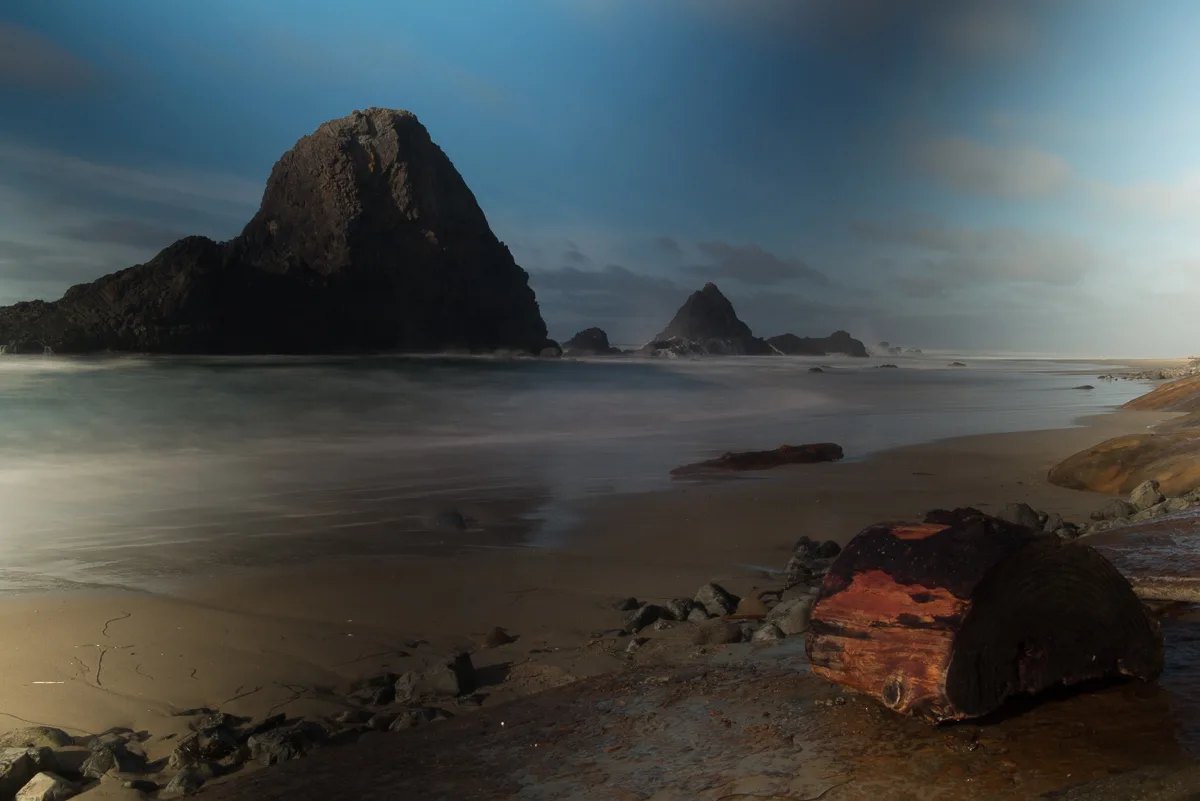
Hard stops are mechanical limits that stop the ring before it reaches that zone. A Japanese retailer's listing for NiSi's True Color VND says the stopper limits travel, and that's what prevents the X. The trade-off is range. Filters with hard stops tend to cover a span of three or four stops (1-5, 2-5, 6-9), while filters without them advertise wide ranges such as ND2-ND400, about 8.6 stops, where the top of the dial is the part you can't use cleanly.
Colour is the other variable. Even K&F Concept, which sells budget VNDs, says on its site that no variable ND on the market avoids colour cast completely. Shoot a grey card at minimum and maximum before a paid job and you'll know how much correction to dial in.
| Filter | Stops | Hard stops | Worth knowing | Price |
|---|---|---|---|---|
| B+W XS-Pro ND Vario MRC nano | 1-5 | Not stated by B+W | MRC nano coating, 86mm front thread; retailers note it should be the outermost filter in a stack | €199 at Calumet (in stock); about $320 to $331 in the US |
| NiSi True Color ND-VARIO Pro Nano | 1-5 | Yes, both ends | "True Color" glass aimed at the yellow tint common to VNDs; 86mm front ring, so the stock hood won't fit | £178 lowest UK price; $241.99 at B&H |
| PolarPro McKinnon Edition II (PMVND) | 2-5 or 6-9 | Preset range with click stops | PolarPro claims no X and no vignetting down to 16mm; the 6-9 is its log filter | About €231 to €255 in EU shops (2-5) |
B+W came out cheapest of the three in the European listings we found, which surprised us, and Calumet had it in stock. NiSi's hard stops and its push on colour make it the safer pick for wide-angle work at the top of the range. PolarPro is the only one here that sells a 6-9 version, so it's the top-tier choice if you shoot log in daylight. Its own page says "this production run is over" while still showing stock, so check availability before you plan around it.
| Filter | Stops | Hard stops | Worth knowing | Price |
|---|---|---|---|---|
| Freewell Hard Stop VND | 2-5 (Standard Day) or 6-9 (Bright Day) | Yes | Sold singly or as a two-filter kit, so you can cover 2 to 9 stops with two filters | $99.99 at Dronefly; from £96.48 in the UK |
| Urth Variable ND Plus+ | 1-5 | Yes, per Urth via B&H | Schott B270 glass; Light and Matter's review found no colour cast and no X | $129 at Adorama |
| Tiffen Variable ND | 2-8 | Not stated | Wide range; Tiffen says the marks between MIN and MAX aren't calibrated stops | $109 list (sold out on Tiffen's US store); around €168 at Vocas |
Freewell is the value pick for log shooters. Its Bright Day 6-9 sells for about $100 in the US and from £96 in the UK, well under what EU shops ask for PolarPro's 2-5. Urth has the best independent review of the mid tier, though we couldn't find it in a European shop, so expect to order from Urth or pay import costs. Tiffen's 2-8 covers the most ground in one filter, and with no hard stops listed you should test the top two stops on your widest lens.
| Filter | Stops | Hard stops | Worth knowing | Price |
|---|---|---|---|---|
| K&F Concept Nano-X ND2-ND32 | 1-5 | Not stated | K&F claims no X; it also says no VND is free of colour cast | €65.35 at Arvutitark; $89.99 on K&F's store |
| Neewer FL-ND2-32S | 1-5 | Not stated | AGC glass, 30-layer coating, 9.5mm thick with thread; another Neewer ND2-32 listing warns the X can show at max on some lenses | €44.99 EU store, £29.99 UK store |
| JJC F-NDV ND2-ND400 | about 1-8.6 | Not stated | Widest range in this list, cheapest way to reach 8 stops on paper | €49 at Whelan Cameras; from £24.59 in the UK |
For a first VND, the K&F or the Neewer will teach you how you like to work for under €70. Neither lists hard stops, so find the point on the dial where the X starts on your widest lens and put a dot of paint there. The JJC is the one to approach with care: ND400 at the top sounds like a log filter, but that end of a stop-less VND is the part that crosses over.
| Tier | Good | Bad |
|---|---|---|
| Top (about €200 to €255) | Hard stops or tight ranges, better coatings, colour claims backed by known glass | Hoods and caps need care with 86mm fronts; only PolarPro offers 6-9 |
| Mid (about €100 to €170) | Freewell and Urth have hard stops; Freewell covers log with its 6-9 | Urth hard to find in EU shops; Tiffen lists no hard stops |
| Budget (under €70) | Cheap way to learn, light, easy to replace | No hard stops listed, colour and X at the top of the dial are on you to test |
| If you shoot | Get | Why |
|---|---|---|
| Log at ISO 800 outdoors | Freewell Bright Day 6-9, or PolarPro 6-9 | Full sun needs 6 to 9 stops at f/8 to f/2.8 |
| Standard profiles at ISO 100, weddings and events | NiSi True Color 1-5 or B+W Vario | 5 stops covers f/4 and slower in sun; better glass for paid work |
| Both log and standard profiles | Freewell 2-5 plus 6-9 kit | Two filters with hard stops cover 2 to 9 stops |
| Your first VND, mostly at ISO 100 | K&F Nano-X or Neewer 1-5 | Under €70; test the X on your widest lens |
| Mostly one small prime | That prime's size, not 82mm | Step-down only pays off with two or more lenses |
Our view: if you shoot log on a mirrorless body, your first VND should be a 6-9 with hard stops. The Freewell Bright Day is the cheapest one we found, and you can add a 2-5 later for interiors and golden hour. If you shoot standard profiles and want one filter for years, the B+W at €199 is the European bargain of the top tier.
Waiting on a new Cinema Line body? Our Sony FX5 shipping date piece covers when it reaches Europe.
82mm, if you own more than one lens. It fits the standard f/2.8 zooms from Sony and Canon, and step-down rings fit it to smaller lenses. On Neewer's EU store the 82mm costs €44.99 against €41.99 for the 67mm.
A single step-down ring from 82mm often helps on a smaller lens, because the filter's frame sits further outside the picture. Stacking two rings can vignette on wide lenses, so use one ring per lens.
Not in full sun at a 180° shutter. At ISO 800, 1/50 s and f/2.8 you need about 9 stops, and about 6 at f/8. A 6-9 stop VND covers that range.
Buy a filter with hard stops (NiSi, PolarPro, Freewell and Urth list them), or find where the X starts on your widest lens and stay below that point on the dial.
Usually not with bayonet hoods on smaller lenses. Some 82mm VNDs have an 86mm front thread (B+W and NiSi), so you'll need an 86mm cap or a filter pouch.
At native ISO 1600 in D-Log 2, the Osmo Pocket 4P needs about 11 stops of ND in full sun. Most Pocket ND kits stop at 6 to 8. The maths, and what to buy.
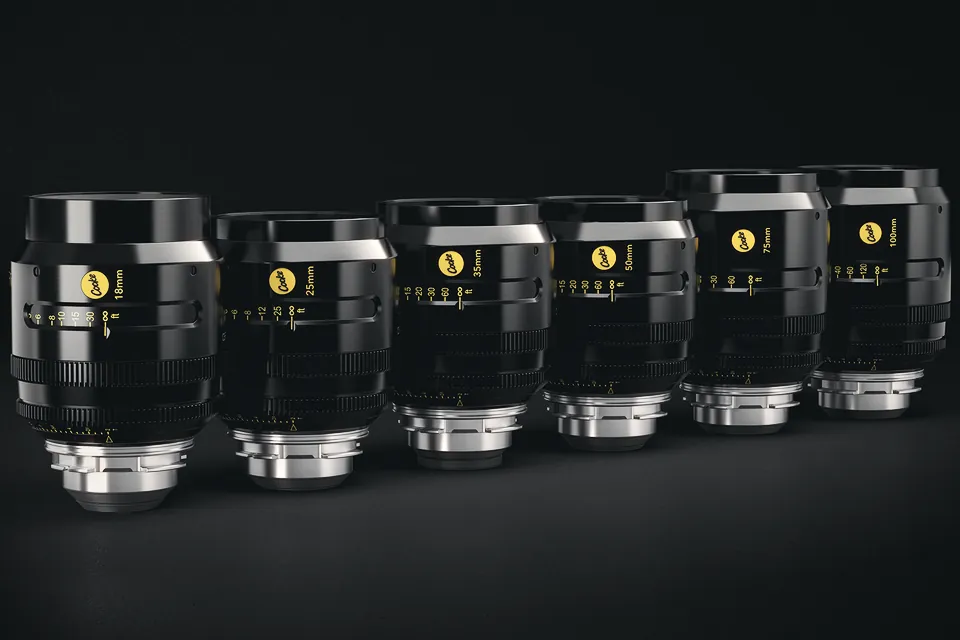
Cooke's S4 FF/i brings the S4 look to full frame: six T2 primes from 18 to 100mm at $15,000 each. Official specs, price and what changed from the S4/i.
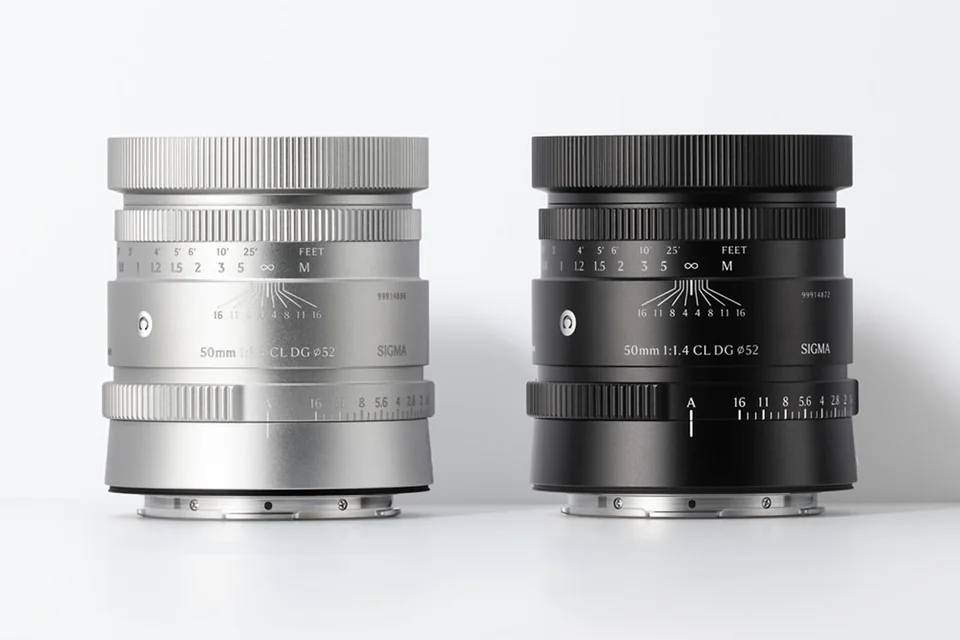
Sigma's first CL lens packs f/1.4 into 56 mm and 375 g. A to-scale size comparison with other 50s, the new RDD autofocus explained, and what it means for video.
 Cameras & dronesNew bodies, drones, firmware updates and what they change on set.
 AccessoriesLenses, gimbals, monitors, audio, lights and the gear around the camera.
 LeaksRumours and leaked specs before launch, with what is confirmed and what is not.
 SoftwareEditing, grading and VFX tools, and the updates worth installing.
 OtherIndustry news, techniques and everything that does not fit a box.