
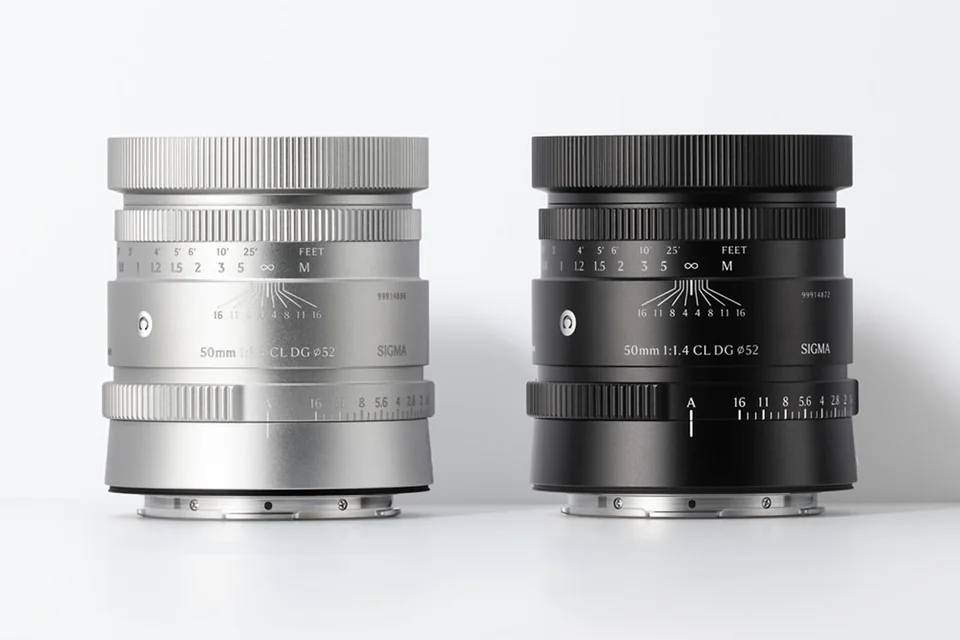
Sigma 50mm F1.4 CL DG: how small it is, and how its new RDD autofocus works
Sigma's first CL lens packs f/1.4 into 56 mm and 375 g. A to-scale size comparison with other 50s, the new RDD autofocus explained, and what it means for video.
Sigma's FP2 adds phase-detect AF, 6K open gate, ProRes RAW and a tilting screen to a pocket full-frame body. Specs, price and what it means for video.
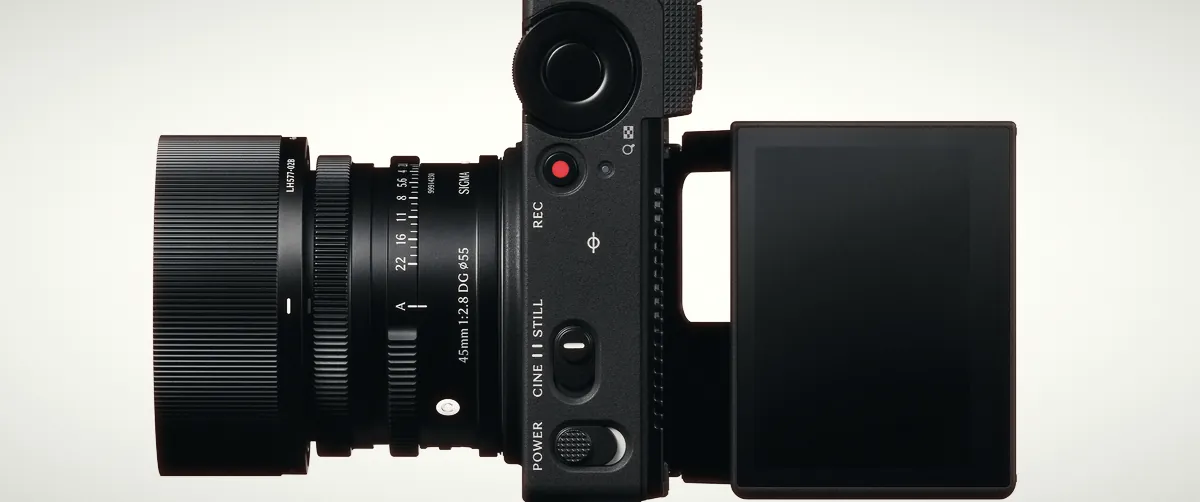
Sigma has announced the FP2, the second generation of its tiny modular full-frame camera. It keeps the size of the original fp but adds a 24.5MP partially stacked sensor with phase-detect autofocus, 6K open gate video up to 59.94p, ProRes RAW to an external SSD, a tilting screen and 70GB of built-in storage. It goes on sale on 11 November 2026 for $2,199, body only.
Seven years after the first fp, this is less a refresh than a rebuild of everything inside the same box. Here is what changed, what still costs extra, and whether it finally works as a compact cinema camera.
| Sensor | Full frame (35.9 × 23.9 mm) partially stacked CMOS, 24.5MP effective |
|---|---|
| Mount | L-Mount |
| Autofocus | On-sensor phase detection + contrast, subject tracking for people, dogs, cats and birds, Eye AF |
| ISO | Stills 100–102,400 (expandable down to 6). Video base ISO 320 / 2500, or 1250 / 10,000 in Log and RAW |
| Shutter | Electronic only, 30 s to 1/25,600 s, flash sync up to 1/50 s |
| Burst | 20 fps, up to 200 JPEG or 180 DNG |
| Video | 6K open gate up to 59.94p, 4K up to 59.94p (100/119.88p cropped), 2K up to 119.88p |
| Codecs | ProRes RAW and ProRes RAW HQ (12-bit, external SSD), H.264, H.265, L-Log |
| Dynamic range | Up to 14.1 stops (4K full frame, L-Log), Sigma’s figure |
| Stabilisation | Electronic, video only. No in-body stabilisation |
| Screen | 3.15″ touch LCD, 2.1M dots, tilts up 90° and down 45° |
| Storage | 70GB internal, SD UHS-II, USB SSD |
| Ports | 2 × USB-C (one 10 Gbps), HDMI Type A 2.1, 3.5 mm mic / timecode in |
| Battery | BP-91, about 370 shots or 130 minutes of video |
| Size and weight | 112.8 × 69.9 × 41.8 mm, 376 g body only, 460 g with battery and card |
| Release | 11 November 2026, $2,199 body only |
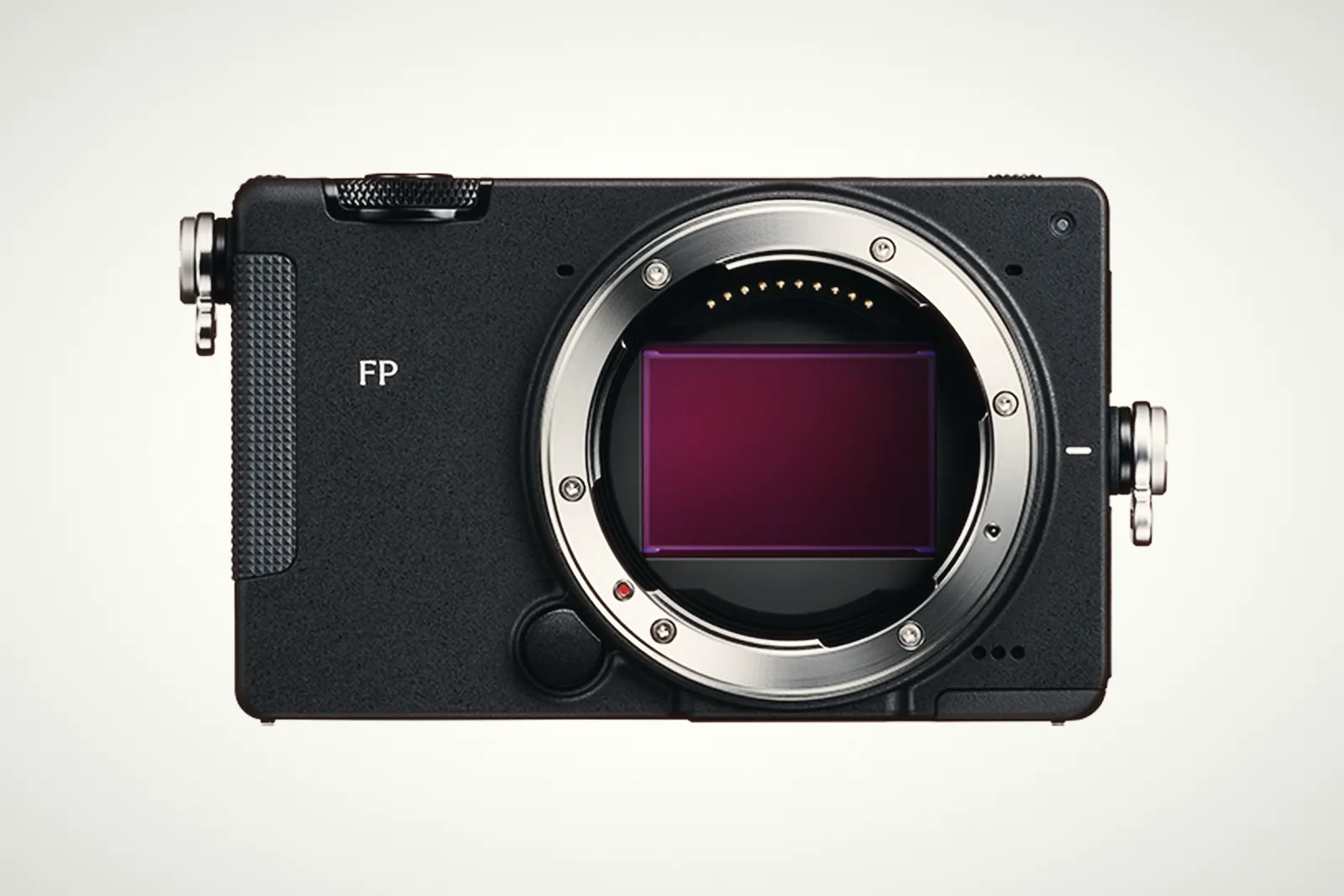
On the outside the FP2 looks almost the same: a brick with an L-Mount, strap lugs on both sides and no grip. It is actually 3.5 mm thinner than the fp and only 38 g heavier with battery and card. Inside, almost every number has moved.
| fp | FP2 | |
|---|---|---|
| Sensor | 24.6MP BSI CMOS | 24.5MP partially stacked |
| Autofocus | Contrast only | Phase + contrast |
| Internal video | UHD 4K, 29.97p | 6K open gate, 59.94p |
| RAW video | CinemaDNG, RAW via HDMI | ProRes RAW to SSD |
| Burst | 18 fps, 12 frames | 20 fps, 200 frames |
| Flash sync | 1/30 s (1/15 s 14-bit) | 1/50 s |
| Audio | 2 ch, 48 kHz, 16-bit | 4 ch 24-bit, 32-bit float* |
| Screen | Fixed 3.15″ | Tilting 3.15″ |
| HDMI | Micro (Type D) | Full size (Type A) |
| Storage | SD, SSD | 70GB inside, SD, SSD |
| Battery | 280 shots, 70 min | 370 shots, 130 min |
| Depth | 45.3 mm | 41.8 mm |
| Weight* | 422 g | 460 g |
*Weight with battery and card. 32-bit float audio needs the optional HU-21 hot shoe unit and Panasonic’s DMW-XLR2 or DMW-DMS1.
Two of these matter more than the rest. The first is autofocus: the original fp relied on contrast detection alone, which made continuous AF in video a gamble. The FP2 adds on-sensor phase detection and subject tracking, the kind of system most rival bodies have had for years. Sigma has not published speed figures, and nobody has tested it in depth yet.
The second is the sensor readout. The FP2 still has no mechanical shutter, so how fast the sensor reads out decides how much rolling shutter you see. Sigma doesn’t quote a readout time, but its flash sync limit gives a clue: 1/50 s against 1/30 s on the fp, and 1/15 s in the fp’s 14-bit mode. A faster readout also means less skew on pans and moving subjects in video.
Closer than ever. A switch on top flips the camera between STILL and CINE, and each mode has its own menus and interface. In CINE mode you get the tools you would expect on a cinema body: waveform, histogram, zebras, false colour, anamorphic desqueeze from 1.25x to 2x, timecode in, and Sigma’s Director’s Viewfinder, which simulates the framing of ARRI, Sony and RED cinema cameras (now including the ALEXA 35, VENICE 2 and BURANO).
| Mode | Frame rates | Notes |
|---|---|---|
| 6K open gate | 23.98 to 59.94p | Full sensor. No electronic stabilisation in 6K |
| 4K | 23.98 to 59.94p | 100 and 119.88p only in crop mode |
| 2K | 23.98 to 119.88p | 16:9 only |
| ProRes RAW / RAW HQ | Up to 6K 29.97p | 12-bit, external USB SSD only |
Aspect ratios are 3:2, 16:9, 17:9 and 4:3, and a single clip can run for up to two hours. In-camera files are H.264 or H.265, with Leica’s L-Log available internally. DPReview reports that Log is now recorded in 10-bit; the original fp was limited to 8-bit in its compressed codecs.
ProRes RAW only records to an external drive on the faster USB-C port. The reason is simple maths: according to DPReview, ProRes RAW HQ runs at up to 5,800 Mbps, about 725 MB/s, far beyond what an SD card can take.
The FP2 has two base ISOs: 320 and 2500 for normal MOV recording, but 1250 and 10,000 for L-Log and ProRes RAW, which can’t go below ISO 1250. Sigma says that is where you get the full 7 stops of highlight headroom. On a bright day that is a lot of light: to shoot Log wide open you will need strong ND filters, as Newsshooter points out.
There is still no sensor-shift stabilisation. You get electronic stabilisation in video, which crops the frame by 1.25x and isn’t available in 6K, plus gyro data you can use in Gyroflow later. Audio is a big step up: 24-bit recording on up to four channels, and 32-bit float with Panasonic’s XLR adapter or digital shotgun mic on the optional hot shoe unit. There is no headphone jack: you monitor through USB-C.
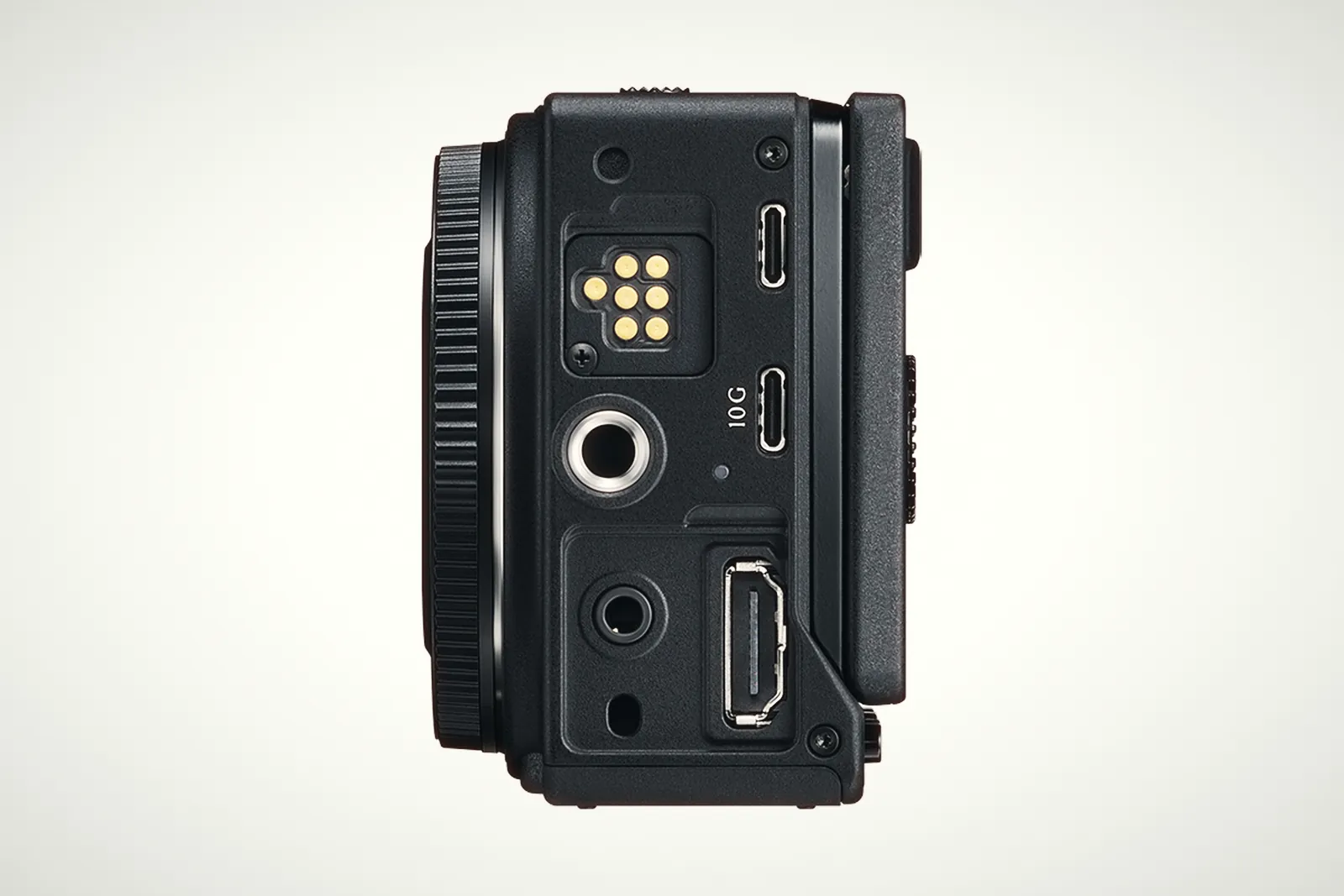
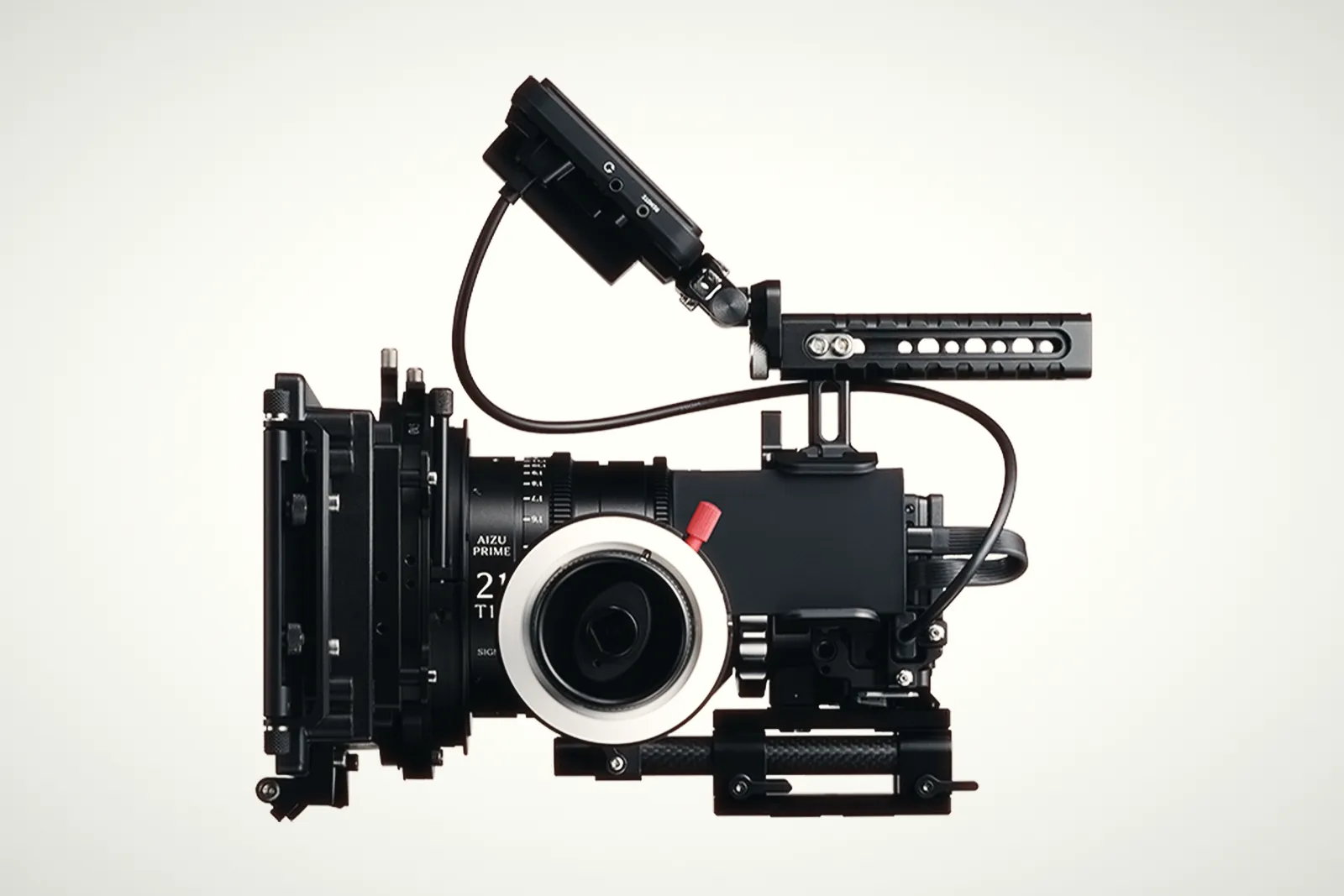
Like the fp, the FP2 is built to be dressed up or stripped down. The body has 1/4″ threads on both sides and underneath, and Sigma has designed a new set of accessories around it:
One catch: according to DPReview, the EVF-21 blocks the 7-pin accessory contacts that the HU-21 needs, so it looks like you can’t use the viewfinder and the hot shoe at the same time. Sigma has not commented on this yet.
Sigma’s US press release lists three options, all available from 11 November 2026:
| FP2 body only | $2,199 |
|---|---|
| FP2 + 50mm F2 DG Contemporary | $2,749 |
| FP2 + EVF-21 viewfinder | $2,749 |
For Europe, Italian magazine FOTO Cult reports €2,199 for the body, €2,759 with the 50mm F2 and €2,799 with the EVF-21. We could not confirm those prices on Sigma’s own sites, so check with your local dealer. Sigma has not announced separate prices for the accessories.
If you want a compact lens to match, Sigma also announced the 50mm F1.4 CL DG, a small all-metal prime due in early spring 2027.
Sigma says it goes on sale on Wednesday 11 November 2026 from authorised dealers. Some US retailers already take pre-orders.
$2,199 body only, or $2,749 bundled with either the EVF-21 viewfinder or the 50mm F2 DG Contemporary lens. Sigma had not confirmed European prices on its own sites when we published.
Not built in. The EVF-21 is an optional clip-on OLED viewfinder that connects through USB-C, and the LVF-21 is a loupe for the rear screen.
No. It has electronic stabilisation for video only, which crops the frame by 1.25x and isn’t available in 6K. It also records gyro data for Gyroflow.
No. ProRes RAW and ProRes RAW HQ record only to an external SSD over USB-C, up to 6K 29.97p. H.264, H.265 and L-Log can go to the internal memory or an SD card.
On paper, by a long way: phase-detect AF, 6K open gate up to 59.94p instead of 4K 30p, a tilting screen, full-size HDMI, better audio and nearly twice the video battery life, in a body that is slightly thinner.
Sigma's first CL lens packs f/1.4 into 56 mm and 375 g. A to-scale size comparison with other 50s, the new RDD autofocus explained, and what it means for video.
Why 1/50 at 24 fps looks like cinema, how to keep it in bright daylight, and the moments when a different shutter angle tells the story better.
 CamerasNew bodies, firmware updates and what they change on set.
 LensesPrimes, zooms and anamorphics, with the look they give.
 SoftwareEditing, grading and VFX tools, and the updates worth installing.
 AccessoriesGimbals, monitors, audio, lights and the small things that save a shoot.
 TipsTechniques and tutorials, from exposure to storytelling.